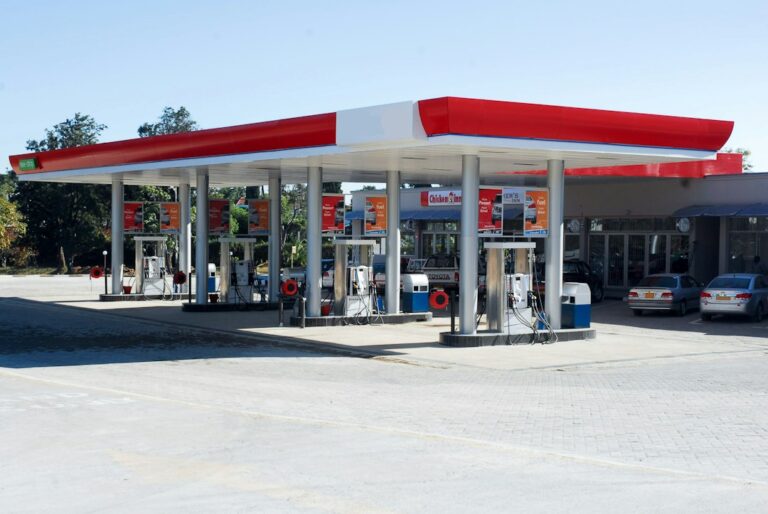
When most people drive past a travel center, they probably do not spend much time thinking about how it got there. They see fuel pumps, a building, parking, food, and a place to stop before getting back on the road. Once everything is finished, it looks fairly straightforward.
Being involved in developing a major gas station and travel center project has given me a different perspective. What looks simple from the road can actually be several projects happening at the same time. Fuel infrastructure has its own requirements. Retail space has its own needs. Restaurants bring additional considerations. Then there are utilities, parking, traffic flow, customer facilities, construction schedules, contractors, and all the smaller details connecting those pieces.
The challenge is not simply getting each part built. The challenge is getting all of those parts to work together.
You Are Not Really Building Just One Thing
I think this is one of the biggest differences between a travel center and a simpler commercial project. You can look at the finished property as one development, but the individual pieces can be very different.
The fueling area has to function efficiently and safely. The retail portion needs to make sense for customers who may only be stopping for a few minutes. Restaurants have their own layouts, equipment, utilities, deliveries, and operating needs. Parking has to accommodate the people using all of those different services.
Each part affects something else.
You can make a decision that works perfectly for one area and then realize it creates a problem for another. That is why I have learned to ask what happens next. If we put something here, what does that change over there? If this area needs more room, where does that room come from?
There are always tradeoffs. The goal is to understand them before you are looking at concrete that has already been poured.
Traffic Flow Becomes Part of the Project
A travel center exists because people move through it. That makes traffic flow a major part of development, not something you consider after construction.
Customers have to get onto the property easily, understand where they are going, park or fuel, find the services they need, and eventually get back onto the road. Different types of vehicles may need different amounts of space. Busy periods can also make a layout feel very different from how it looks when the site is empty.
I find myself trying to picture the property in use rather than just as a construction site. What happens when several vehicles arrive at once? Is someone going to have to cross an awkward traffic pattern to reach another part of the property? Are entrances and exits where people would naturally expect them to be?
You can never anticipate every customer’s behavior. People will always use a property in ways you did not expect. Still, thinking through those situations during development gives you a better chance of creating something that feels simple once it opens.
The Things Underground Matter as Much as the Things Above It
A lot of attention goes to what people can see. I understand that. Buildings, signs, restaurants, fuel pumps, and finished parking areas are what make a project feel real.
Some of the most important work is much less visible.
A major travel center can require extensive infrastructure for fuel, electricity, water, sewer, drainage, communications, and other services. Different parts of the development may also have different requirements.
The question is not only whether those systems are available. You also need to consider where they go, when they are installed, and what other construction depends on them.
This is where planning becomes important. Discovering that something needs to change early can be frustrating. Discovering it after several other parts of the project are complete can be much worse.
Restaurants Add Another Layer
Food can be an important part of a modern travel center, but adding restaurants also adds another layer to the development.
A restaurant is not simply an empty retail space with tables and a kitchen. It requires equipment, deliveries, storage, utilities, customer access, waste handling, and other operational considerations.
Then you have to think about how the restaurant fits into the rest of the property.
Will customers stopping for food interfere with customers who only want fuel? Is there enough parking? How will deliveries work? What happens during the busiest times?
These are practical questions, but practical questions are what development is made of. I have found that the glamorous decisions are a very small part of the process. Most days, you think about things customers will hopefully never have to think about.
A Change Rarely Affects Only One Thing
One lesson that keeps coming up for me is that very few decisions on a project this size are isolated.
If something changes in one area, I immediately want to know what else it affects. Does it change the schedule? Does another contractor need to adjust? Does it affect access? Are utilities involved? Does another part of the project now have to wait?
Sometimes a change is worth making even when it creates additional work. If you recognize that something will function better in the long run, sticking with the original plan simply because it is easier can be the wrong decision.
Other times, you have to resist changing something just because another option suddenly looks better. Every change costs time, coordination, or complexity.
That can be a difficult judgment call. Is this change actually going to improve the finished project, or are we creating more work because we are second-guessing ourselves?
There is not always an obvious answer.
The Finished Project Should Feel Less Complicated Than the Development
I think there is an interesting contradiction in developing something like a travel center. The development itself can be complicated, but the finished experience should not feel complicated to the customer.
Someone who has been driving for hours does not want to solve a puzzle when they stop. They want to know where to go. They want fuel, food, a restroom, or whatever else they need. They want the property to be clean, accessible, and easy to navigate.
If we have done our job during development, much of the complexity should disappear by the time the customer arrives.
My years in hospitality and tourism have taught me that. Customers do not need to know everything that went into creating an experience. They just know whether the experience works for them.
There Is Always Something You Did Not Expect
No matter how carefully a project is planned, I do not believe you can anticipate everything.
Construction has too many variables. Different people are involved, timelines vary, and site conditions, deliveries, approvals, equipment, and decisions change as the project moves forward.
I have learned not to expect a perfectly straight path.
When something comes up, my first instinct is usually to understand how large the problem actually is. If it is something small that I can handle immediately, I would rather deal with it before it grows. If it is a major decision, sometimes the smarter thing is to think about it before reacting.
That approach has served me in business for years, and I apply it to development as well.
Simple From the Road Takes a Lot of Work Behind the Scenes
I look at travel centers differently now. What appears to be a gas station, store, and a few other businesses from the road represents a much larger collection of decisions.
Fuel infrastructure has to work with traffic flow. Traffic flow has to work with parking. Parking has to work with the retail and restaurant areas. Utilities have to support all of it. Contractors and schedules have to come together in the right sequence.
Some days, one decision seems to lead to five more questions. That can be frustrating, but it is also part of developing something at this scale.
The finished project should eventually look straightforward. People will pull in, get what they need, and move on.
They may never know how complicated it was to make the experience feel that simple. From what I have seen, that is actually a good sign.